Theater people have spent 2,500 years accumulating superstitions, jargon, and grudges, and every one of them has a backstory. Fifteen questions from the wings — cover the answers, lock each one in, and keep score. Places, everyone.
Where does the word “thespian” come from?
Tradition holds that Thespis of ancient Greece was the first performer to step out of the chorus and speak as a character, around the 6th century BC — the first actor, lending his name to all who followed.
What did one penny buy at Shakespeare's Globe?
Standing room in the open yard right against the stage — home of the “groundlings,” who watched three-hour tragedies on their feet, in the weather.
What destroyed the original Globe in 1613?
A prop cannon fired during a performance of Henry VIII ignited the thatched roof and burned the theater to the ground. The only reported casualty was a man whose breeches caught fire — extinguished, a contemporary letter says, with a bottle of ale.
Why won't actors say “Macbeth” inside a theater?
The curse. It's “the Scottish Play” backstage, and tradition prescribes a remedy for slip-ups: leave the theater, spin three times, spit, and ask to be let back in.
Why do we say “break a leg”?
Nobody knows for sure — the real superstition is that wishing luck outright invites disaster. Theories point to bending the knee in a bow, or crossing the “leg line” past the side curtains, which meant you actually performed and got paid.
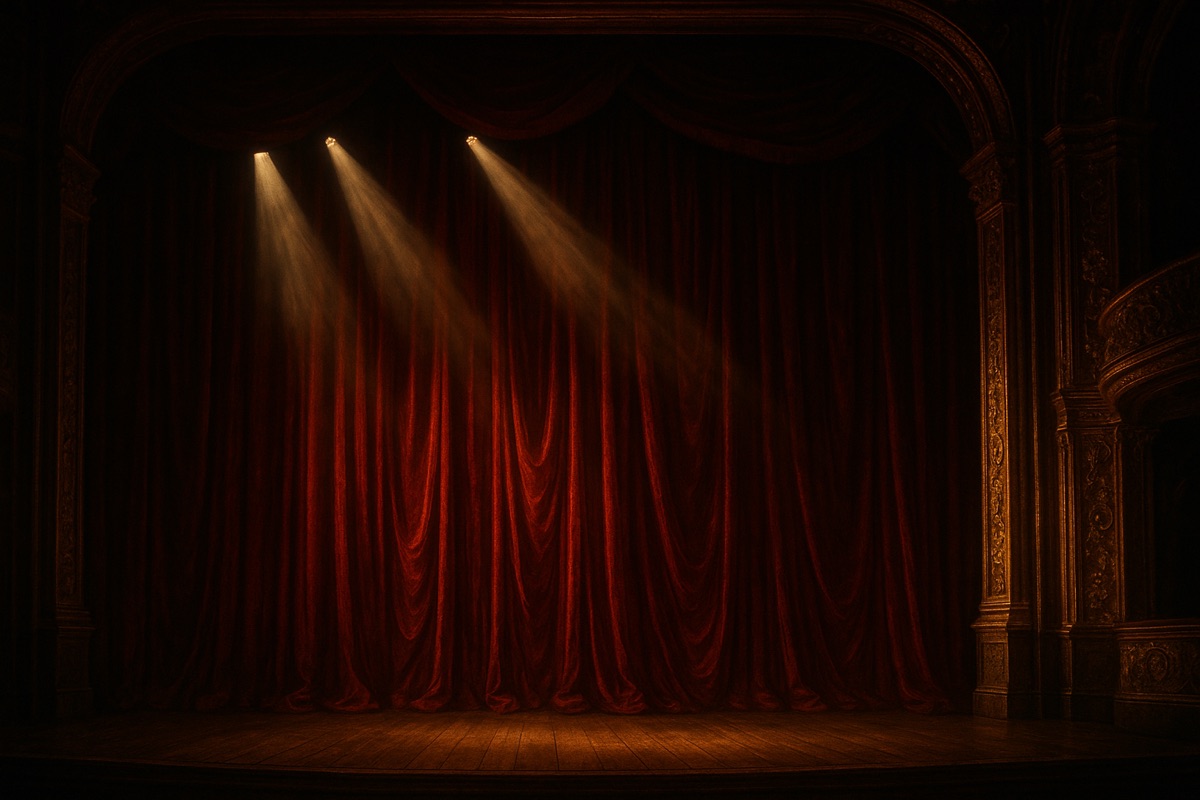
What is a ghost light?
The single bare bulb left burning on an empty stage every night — officially so no one walks into the orchestra pit, unofficially to keep the theater's ghosts company.
Why is whistling backstage forbidden?
Early stagehands were often off-duty sailors who ran the rope rigging and cued scenery changes with coded whistles. A casual whistle in the wrong spot could bring a sandbag down on your head.
What was limelight, literally?
A cylinder of quicklime heated in a flame until it glowed brilliant white — the dazzling spotlight of the pre-electric stage, and the reason we still say someone is “in the limelight.”
Why is stealing focus called “upstaging”?
Old stages were raked — sloped upward away from the audience. Drift upstage, literally uphill, and your scene partners had to turn their backs on the crowd just to face you.
What was a claque?
Professional applause. Nineteenth-century houses, famously the Paris opera, hired organized clappers — with specialists assigned to laugh, weep, or demand encores on cue.
Why is Broadway called “The Great White Way”?
The blaze of early electric signs and marquee lights along the street — a nickname earned around the turn of the 20th century, when that much artificial light was itself the show.
What is the longest-running play in the world?
Agatha Christie's The Mousetrap, on stage in London since 1952 — some 29,000 performances and counting. Christie guessed it might last eight months. Audiences are still asked to keep the twist secret.
What was the longest-running show in Broadway history?
The Phantom of the Opera — nearly 14,000 performances across 35 years before the chandelier fell for the last time in 2023.
In Japanese kabuki, who traditionally plays the female roles?
Men — specialists called onnagata have carried the tradition since women were banned from the kabuki stage in 1629.
Who is the Tony Award named after?
Antoinette “Tony” Perry — actress, director, and wartime chair of the American Theatre Wing.
Score yourself before the house lights come up. Twelve or better and you may take a bow — downstage, where everyone can see you, as you now know to insist.