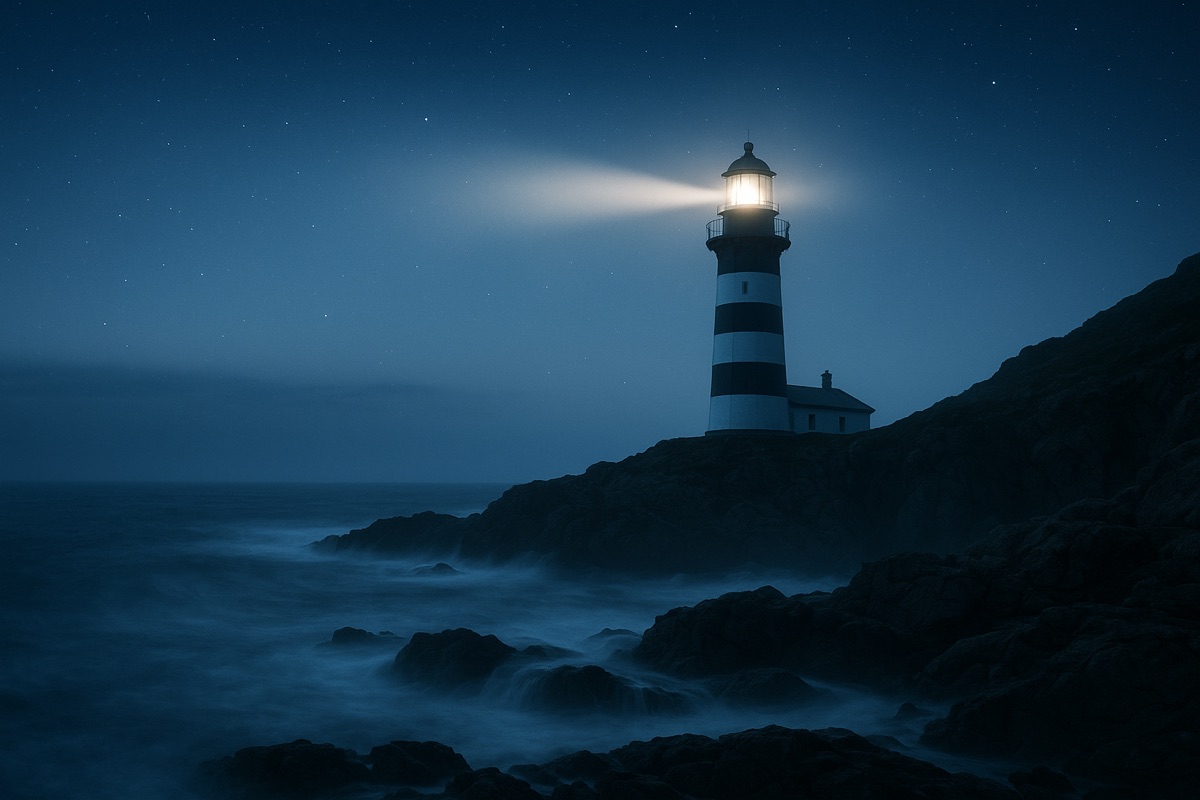
A lighthouse is architecture with a job description: go stand in the worst spot on the map and stay lit. The people who built and kept them left behind some of the best true stories in trivia — heroic engineering, stubborn traditions, and one mystery that has never been solved. Three rounds. Commit before each reveal, and keep score like a keeper keeps a logbook.
Round One: The Ancient and the American
Start with the founding monument. Which of the Seven Wonders of the Ancient World was a working building with a day job? The Pharos of Alexandria — the great lighthouse, raised around 280 BC and estimated at well over 300 feet tall, among the tallest structures on Earth for centuries. It guided ships for roughly 1,600 years before earthquakes finally brought it down, and its stones ended up in the harbor fort that stands on the site today. The Pharos also pulled off the rarest trick in architecture: it became a common noun. Lock this in — what do the French call a lighthouse? Phare. Spanish and Italian, faro. One building, still on duty inside half the languages of Europe.
Across the Atlantic now. Where was America's first lighthouse, and when? Boston Light, on Little Brewster Island, lit in 1716 — six decades before independence. The British blew it up on their way out of Boston in 1776; it was rebuilt in 1783 and never left service. And here's the modern twist worth a bonus point: Boston Light is the last officially staffed lighthouse in the United States, because Congress passed a law in 1989 requiring it to keep a keeper even as every other American light went automatic. One lighthouse, protected from progress by statute.
One more American oddity before the engineering round. What famous statue spent its early career as an official lighthouse? The Statue of Liberty — operated by the Lighthouse Board from 1886 to 1902, torch duly listed as a navigational aid. She was, by the standards of the day, a fairly mediocre lighthouse and a spectacular everything else.
Round Two: The Engineers Against the Sea
Now the round with a body count. In 1698, Henry Winstanley built the first lighthouse on the Eddystone Rocks, a reef off Plymouth that had been shredding ships for generations. Confident in his creation, he declared that he wished to be inside it during "the greatest storm that ever was." What happened? In November 1703, the greatest storm in southern England's recorded history arrived — and Winstanley was in the lighthouse, overseeing repairs. Neither survived. The Great Storm swept tower and builder away completely, and trivia acquired its most airtight lesson about tempting fate.
The reef won that round, but not the war. When John Smeaton rebuilt Eddystone in 1759, what two ideas made his tower the template for every wave-battered lighthouse since? Lock it in. He shaped the tower like the trunk of an oak tree — wide, low-slung, curving — and he cut his granite blocks with dovetail joints so the stones interlocked like furniture. The design worked so well it outlasted the rock beneath it; the tower was dismantled and re-erected on Plymouth Hoe as a monument, where it still stands.
Scotland answers with a dynasty. The Bell Rock Lighthouse, finished in 1810 on a reef that disappears underwater at high tide, still stands as the world's oldest surviving sea-washed lighthouse. Which engineering family built it — and which famous member jumped ship? The Stevensons: Robert Stevenson built Bell Rock, and his sons and grandsons went on to build most of Scotland's lighthouses across a century and a half. The family's great defector was grandson Robert Louis Stevenson, who abandoned engineering for writing — trading real towers on real rocks for pirates and buried gold.
And the invention that changed the score entirely: what did French physicist Augustin-Jean Fresnel introduce in 1822? The Fresnel lens — concentric rings of prisms that gathered a lamp's scattered glow into a beam visible 20 miles and more out to sea. It has been called the invention that saved a million ships, and no one has seriously audited the claim downward.
Round Three: Keepers, Codes, and One Empty Tower
What were lighthouse keepers nicknamed? "Wickies" — from the endless trimming of lamp wicks that filled their nights before electrification. And how does a sailor tell one lighthouse from another in the dark? Every light flashes its own signature pattern — its "characteristic," charted so navigators can read the coast like an ID badge — and by day, the distinctive paint jobs called daymarks do the same job. The stripes are not decoration; they're a name tag.
The finale is the mystery. In December 1900, a relief boat reached the Flannan Isles lighthouse off Scotland's Outer Hebrides and found what? Nothing — all three keepers gone. Lamp trimmed, logs kept until the final days, no bodies ever found. Lock in the famous detail before the twist: the half-eaten meal on the table. It was never there — that image comes from a 1912 poem, not the actual reports. The official investigation concluded the men were most likely swept away by a freak wave while securing gear in a storm. The truth is grimmer and simpler than the legend, and the legend has outrun it for a century anyway.
Count your score. If you held Winstanley's boast, the dovetailed granite, and the meal that never existed, consider your light officially lit — flashing a characteristic all your own.