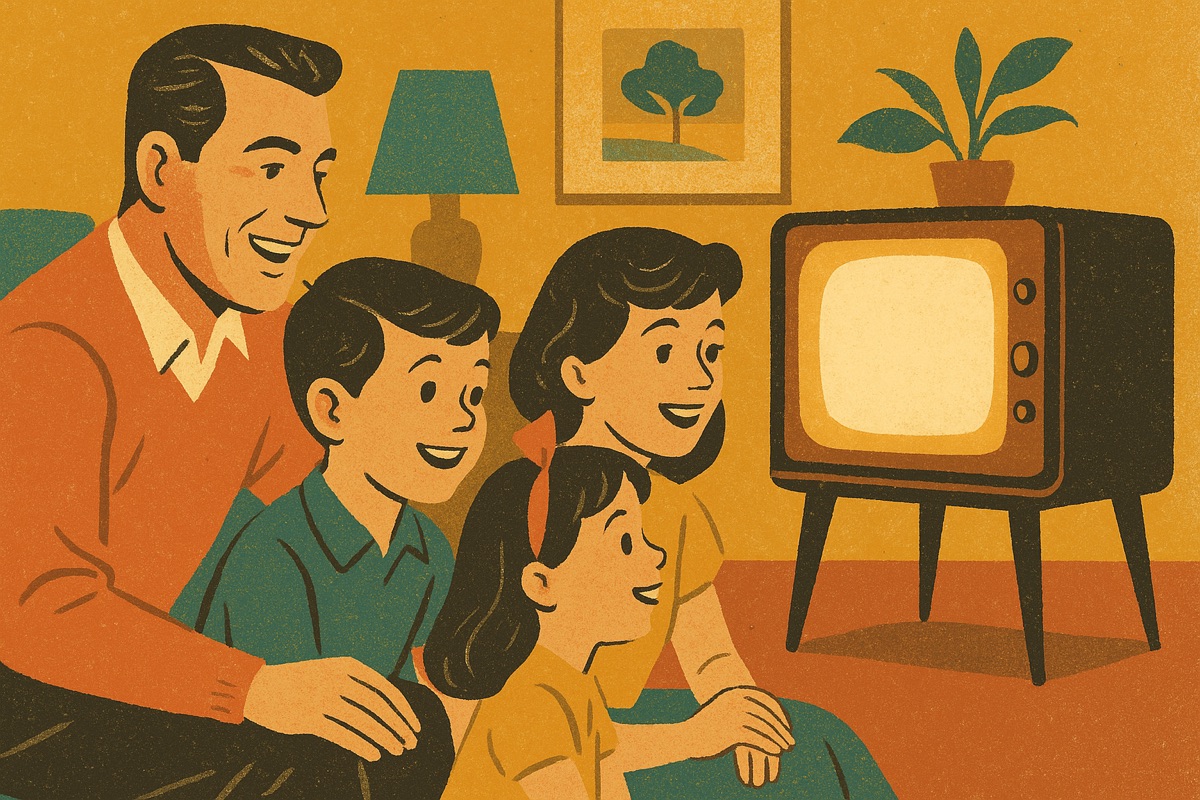
Television is young enough that people who watched its first broadcasts lived to see streaming, and old enough to have lore. This round covers marathon shows, legendary finales, and the night a children's movie enraged an entire football audience. Answer before each reveal, keep score, and be honest about the Heidi one.
Round One: The Long Haul
Start with endurance. What is the longest-running scripted primetime series in American TV history? It's The Simpsons, on the air since December 1989 — long enough that adults watching the premiere could now watch it with their grandchildren. But scripted primetime is only one category, so try this: what news program, first broadcast in 1947, is the longest-running show on American television, period? That's Meet the Press, which has outlasted every sitcom, drama, and fad thrown at it for more than three-quarters of a century.
Now the marathon nobody expects. The soap opera Guiding Light ended in 2009 after a combined run on radio and television of about how many years? Seventy-two. It began on radio in 1937, jumped to TV in 1952, and simply kept going — one continuous story stretching from the Great Depression to the smartphone era.
One more: how much did the first legal TV commercial cost? It aired on July 1, 1941 — a brief spot for Bulova watches before a Brooklyn Dodgers broadcast — and the airtime famously cost about nine dollars. Adjust for inflation all you like; it remains the greatest bargain in advertising history.
Round Two: Finales and Fiascos
The big one. Which series finale stands as the most-watched scripted broadcast in American television history? M*A*S*H. "Goodbye, Farewell and Amen" aired in February 1983 to roughly 106 million viewers — a number no scripted show has touched since, and one that gets harder to touch every year as audiences splinter. And for the follow-up point: which 1980 cliffhanger had an enormous chunk of the country asking who shot a Texas oil baron? That's Dallas and the "Who shot J.R.?" mystery, whose resolution drew one of the largest audiences of the era and taught every show since how to end a season.
Now the fiasco. In November 1968, NBC cut away from a Jets–Raiders game with about a minute left to start a children's movie on time. What happened next? The Raiders scored two touchdowns in nine seconds of game clock to win — and virtually nobody watching at home saw it. The "Heidi Game" generated such a flood of furious phone calls that networks changed their policies: football games are shown to the end. A children's classic about a Swiss orphan rewrote American broadcast rules.
Bonus round, no charge:
What word did CBS famously avoid using on air when Lucille Ball's real-life pregnancy was written into I Love Lucy in 1952?
"Pregnant" — the show stuck to daintier phrasing like "expecting," even titling the episode with the French "enceinte."
And while we're in the 1950s: I Love Lucy also pioneered shooting sitcoms on film with multiple cameras before a live audience — which is why crisp reruns of Lucy exist at all, and why the rerun itself became a business.
Round Three: Name That Tune
Theme songs now, and the best story in the category. The theme to M*A*S*H, "Suicide Is Painless," was written for the original 1970 film — and the lyrics were written by whom? Director Robert Altman's son Mike, who was around 14 at the time. Altman loved to point out that thanks to decades of royalties, his teenage son ultimately earned far more from the song than he did for directing the movie.
Next: which castaway sitcom used its theme song as a plot-delivery device, narrating the entire premise — the ship, the storm, the passenger list — before every episode? Gilligan's Island, whose jaunty ballad exists so that no viewer could ever be confused about why these people are on an island. It worked so well that decades later, most Americans can still sing the shipwreck.
Two quick ones to close. Which band recorded "I'll Be There for You," the clap-along theme to Friends? The Rembrandts, who watched a one-minute TV theme become their biggest hit. And what wordless, four-note earworm introduced Rod Serling's eerie anthology series? The Twilight Zone — a theme so effective that its title became shorthand for "something strange is happening," which is about the highest honor television music can earn.
Final tally time. If you knew the nine-dollar commercial, the 72-year soap, and the teenager behind TV's most-watched-finale theme, you're cleared for the championship round of any couch you sit on.