The history of invention is mostly the history of people paying attention to their mistakes. Every answer below is a real product with a real origin story — commit before you reveal.
What melted in an engineer's pocket and led to the microwave oven?
A chocolate bar — Percy Spencer noticed it while testing radar equipment in 1945.
What was bubble wrap originally invented to be?
Textured wallpaper. It flopped — then someone shipped something fragile.
What was Play-Doh first sold as?
Wallpaper cleaner.
Velcro was inspired by what nuisance?
Burrs stuck to engineer George de Mestral's dog after a walk in the Alps.
What bestselling product came from a glue that wouldn't stick strongly?
Post-it Notes — 3M's Spencer Silver invented the weak adhesive; colleague Art Fry found the use.
Which came first: the can or the can opener?
The can — by roughly half a century. Early tins said "cut round the top with a chisel and hammer."
The Slinky was born when what happened?
A spring fell off naval engineer Richard James's shelf — and "walked."
Who invented Coca-Cola?
Atlanta pharmacist John Pemberton, in 1886.
Penicillin was discovered when what ruined an experiment?
Mold contaminated Alexander Fleming's petri dishes in 1928 — and killed the bacteria around it.
What did the Wright brothers build and repair before airplanes?
Bicycles, in their Dayton, Ohio shop.
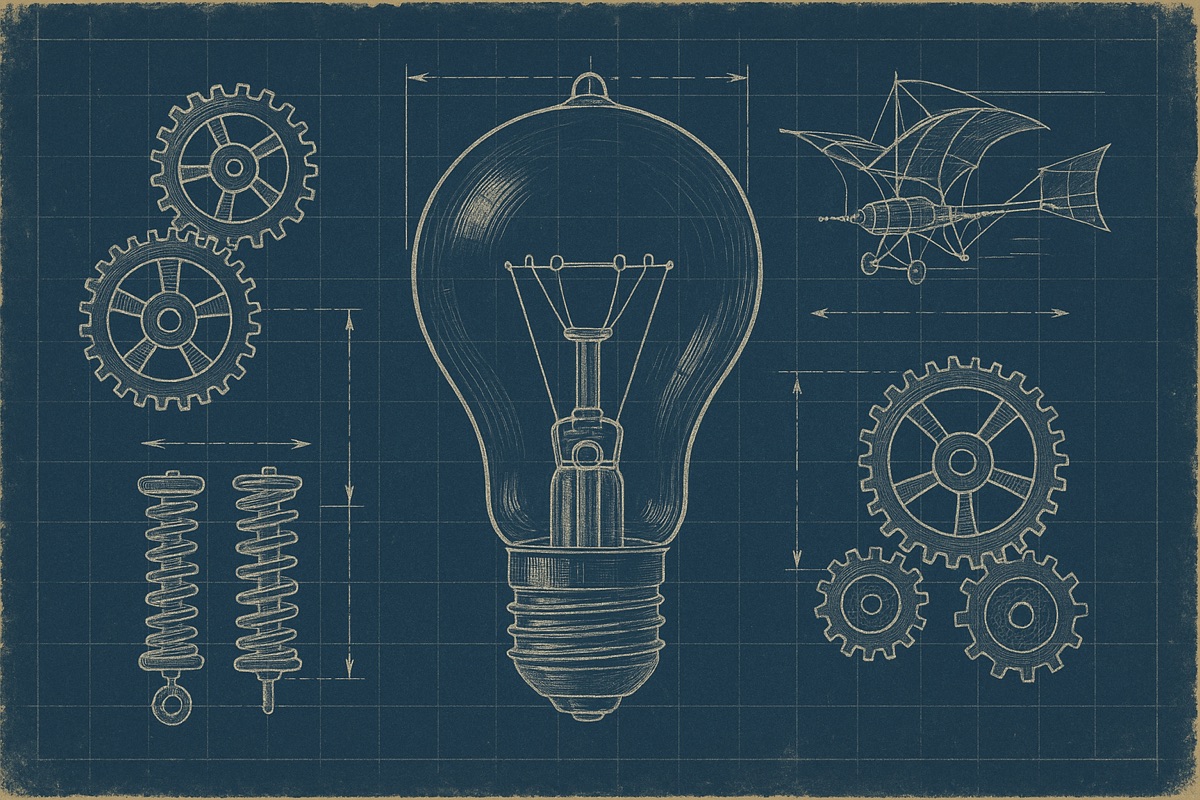
Which was patented first: the telephone or a practical lightbulb?
The telephone — Bell in 1876; Edison's lamp patent came in 1880.
What tea-shipping shortcut accidentally gave us the tea bag?
Around 1908, merchant Thomas Sullivan sent samples in silk pouches — customers dunked them whole.
Moral of the round: if your experiment fails, check whether it walked, stuck, or melted something first.