The United States keeps 63 headline national parks inside a system of more than 400 protected sites, and the paperwork behind them is stranger than the postcards. Cavalry patrols, no-toll clauses, one very unlucky tree. Answer out loud before each reveal, keep score, and plan your road trip accordingly.
Round One: The Originals
Start at the beginning. What was the world's first national park, and when was it created? Yellowstone, signed into existence by President Ulysses S. Grant in 1872 — no country had ever done anything like it. Now the twist that wins the round: Wyoming, Montana, and Idaho, the three states the park spreads across, didn't achieve statehood until 1889 and 1890. Yellowstone is older than every state it sits in.
Which raises a practical question: with no park rangers in existence, who actually protected Yellowstone from poachers and vandals? Lock it in. The United States Army. Cavalry troops rode patrol out of Fort Yellowstone from 1886 all the way to 1918 — the National Park Service wasn't even created until 1916, a full 44 years after the park itself. For three decades, the geysers had a military garrison.
One more origin question, and it's a trap: what is the oldest federally protected land in the country? Not Yellowstone. Hot Springs, Arkansas was set aside as a federal reservation in 1832 — four decades earlier — to protect its thermal waters. It didn't get the words "national park" until 1921, which makes it simultaneously one of the oldest protected places and one of the newer parks. Trivia loves a technicality.
Round Two: The Records Board
Biggest first. Which national park is the largest? Wrangell–St. Elias in Alaska, at 13.2 million acres — by the Park Service's own comparison, bigger than Yellowstone, Yosemite, and the entire country of Switzerland combined. At the other extreme, the smallest national park is Gateway Arch in St. Louis, about 91 acres wrapped around a 630-foot monument. You could fit it into Wrangell–St. Elias roughly 145,000 times.
Now the attendance question everyone gets wrong. Which park draws the most visitors? Not the Grand Canyon, not Yosemite — it's Great Smoky Mountains, with around 12 to 13 million visits a year, roughly double its nearest rival. Part of the secret: it has long charged no entrance fee, a quirk tied to the road that runs through it — Tennessee transferred Newfound Gap Road to the federal government with the condition that no toll ever be charged on it. The most popular park in America is also the one with no gate.
Finish the round underground. Mammoth Cave in Kentucky holds what world record? It's the longest known cave system on Earth — more than 400 miles mapped so far, with surveyors still adding new passages. The record grows almost every year, because nobody has found the end.
Round Three: Trees, Gators, and Deep Time
Tree round. What is the largest tree on Earth by volume? The General Sherman, a giant sequoia in Sequoia National Park — a single trunk holding on the order of 52,000 cubic feet of wood. But the harder question is the sad one: what happened to Prometheus, a bristlecone pine on Nevada's Wheeler Peak, in 1964? Lock it in. A graduate student studying climate history got permission to cut it down — and the ring count came back at more than 4,860 years, almost certainly the oldest tree anyone had ever dated. The mountain it stood on later became Great Basin National Park, roughly two decades too late for Prometheus.
Next: what makes Everglades National Park a first in park history? It was created to protect life rather than scenery — dedicated in 1947 as a sanctuary for a one-of-a-kind wetland rather than for mountains and canyons. Bonus point if you know its most famous cohabitation: it's generally cited as the only place on Earth where alligators and crocodiles live side by side in the wild.
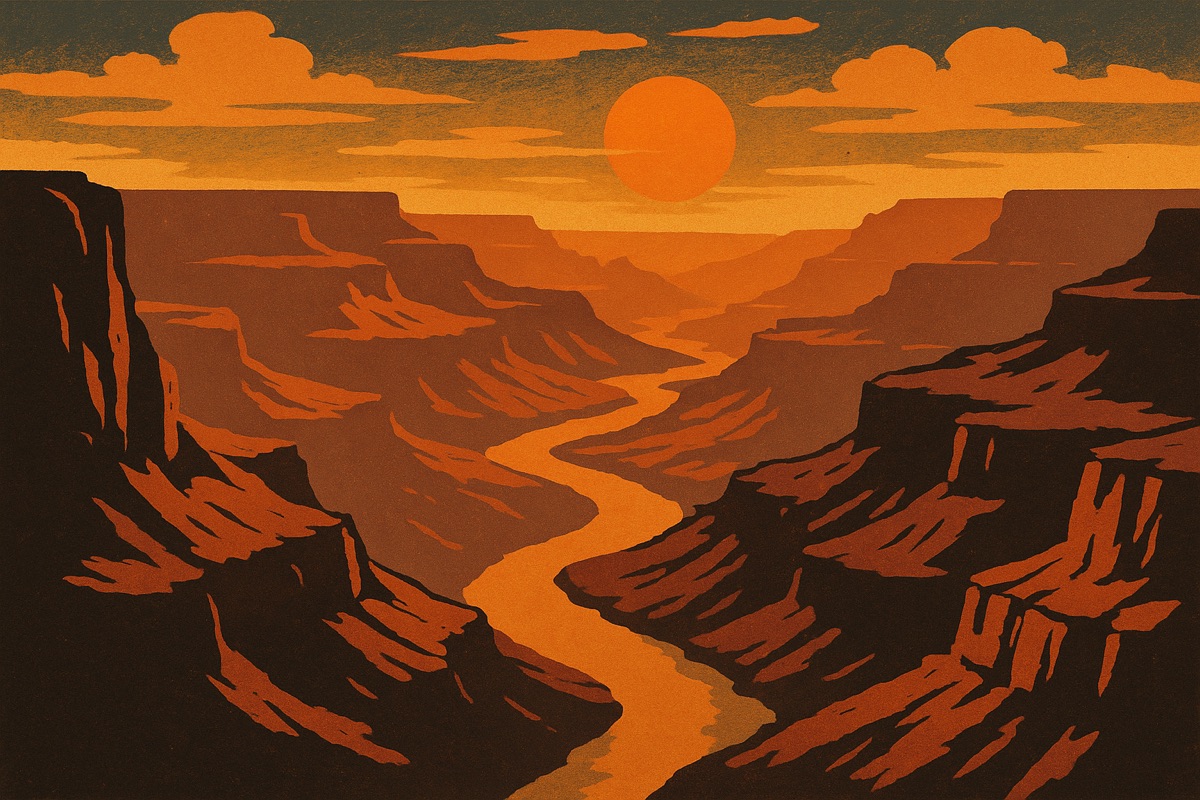
Close with deep time. The rocks at the bottom of the Grand Canyon are about how old? Roughly 1.8 billion years — nearly half the age of the planet. The canyon itself, though, is a geologic newborn: the Colorado River did most of the carving within about the last five or six million years. Ancient rock, recent ditch.
Tally it up. If you knew the cavalry ran Yellowstone, the Smokies ride free, and Prometheus outlived the pyramids only to lose to a chainsaw, you're ready to be insufferable at every scenic overlook in the lower 48 — and legally required to read the plaques aloud.