A great hoax is just trivia with a criminal record: somebody invented a fact, the world swallowed it, and the correction spent decades trying to catch up. The stories below fooled thousands — a couple fooled millions. Answer each question before the reveal, keep score, and retire the phrase "people couldn't possibly have believed that." They believed that.
Round One: Trust the Broadcasters
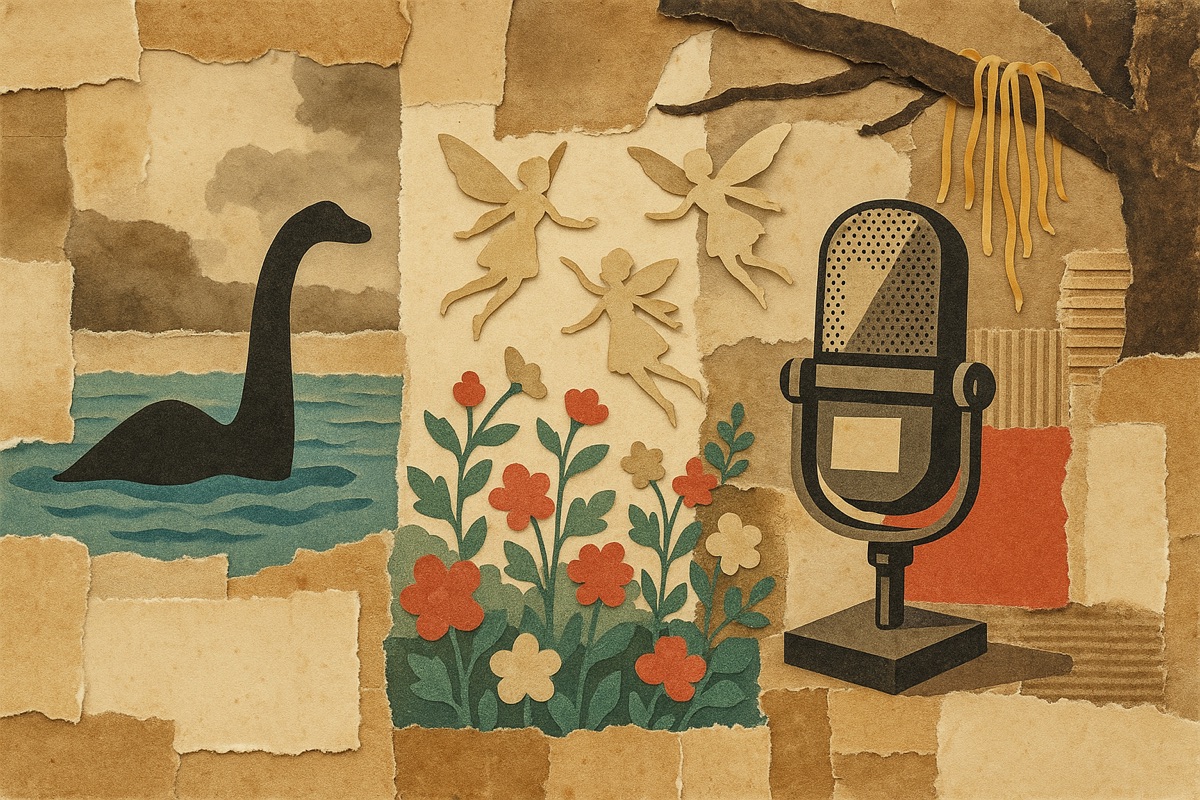
Start on April 1, 1957, when the BBC's flagship news program Panorama aired a sober three-minute report on Switzerland's unusually fine harvest — of what? Lock it in. Spaghetti. The film showed a Swiss family plucking strands of pasta from the family spaghetti trees while Richard Dimbleby, one of Britain's most trusted voices, narrated with total gravity. Hundreds of viewers contacted the BBC, many asking how to grow their own. The advice reportedly given: "place a sprig of spaghetti in a tin of tomato sauce and hope for the best." Pasta was still exotic enough in 1950s Britain that it worked beautifully, and it's still widely considered the finest April Fools' broadcast ever made.
Now to Scotland, 1934, and the most famous monster portrait ever taken. The "surgeon's photograph" of the Loch Ness Monster — that slender gray neck rising from rippled water — stood for sixty years. What was actually in the water? A toy submarine fitted with a sculpted neck, a model barely a foot tall. Better still is the motive: revenge. A big-game hunter named Marmaduke Wetherell had been hired by a newspaper to find Nessie, triumphantly produced "monster footprints" — and was then humiliated when they turned out to have been made with a hippopotamus-foot umbrella stand. His stepson later admitted building the model for him; the confession only surfaced in the 1990s, when the hoaxers were nearly all dead and the photo was on postcards worldwide. The "surgeon" — a London doctor recruited to lend the picture credibility — had done his job almost too well.
Round Two: The Paper Trail
In 1917, two Yorkshire cousins — Elsie Wright, sixteen, and Frances Griffiths, nine — photographed what at the bottom of their garden? Fairies. The dancing figures were paper cutouts, copied from illustrations in a popular children's book and propped up with hatpins. Here's the question worth the round: which world-famous author publicly championed the photographs as genuine? Sir Arthur Conan Doyle — the creator of literature's greatest skeptic wrote them up enthusiastically in 1920. The cousins kept the secret until 1983, when, as elderly women, they finally confessed — though Frances insisted to the end that the fifth and final photograph was real. Even the confession came with a cliffhanger.
Skip ahead to 1983, when the German magazine Stern paid roughly nine million marks for some sixty volumes of Adolf Hitler's secret diaries. Forger Konrad Kujau had produced them with postwar paper and ink, but the giveaway was sitting on the cover the whole time: the ornate initials he'd glued on read "FH," not "AH" — he'd bought the wrong Gothic letter. A celebrated historian initially vouched for the find anyway; within weeks the forensics came back, and both the forger and the journalist who'd brokered the deal went to prison for about four and a half years each.
Bonus round, no charge: in 1835, a New York newspaper ran six articles describing what, newly discovered on the Moon?
Bat-winged moon-people, unicorns, and two-legged beavers — all credited to the famous astronomer John Herschel, who was safely unreachable in South Africa. The paper's circulation soared. Herschel reportedly found it funny. At first.
Round Three: Fooling the Experts
Hoaxes that fool the public are common; the elite ones fool the professionals. In 1912, amateur collector Charles Dawson unveiled skull fragments from a Sussex gravel pit — "Piltdown Man," hailed as the missing link between apes and humans. How long did it fool the scientific establishment, and what was it really? About forty years. Testing in 1953 exposed a medieval human braincase paired with an orangutan jaw, its teeth filed down and the whole assembly stained to look ancient. Generations of textbooks had printed a taxidermy prank.
And the finale, which is a hoax about a hoax. On October 30, 1938, Orson Welles's Mercury Theatre aired its War of the Worlds broadcast, and everyone knows what happened next: nationwide panic, highways jammed with fleeing families. Except the ratings say otherwise. A national survey taken that very night found only about two percent of households listening to the program, and researchers have never verified the stampedes or panic-deaths of legend. The "mass hysteria" was largely manufactured by newspapers, which were delighted to paint their upstart rival, radio, as a public menace. The best-documented panic caused by the broadcast is the panic about the panic — which means the biggest hoax on this list was pulled on Orson Welles, not by him.
Tally your score. If you called the tomato-sauce advice, the umbrella-stand revenge, and the panic that wasn't, you're now the hardest person at the table to fool — which, history suggests, is exactly what everyone believed the week before the spaghetti harvest.