Deserts look empty from a distance and get stranger the closer you look. Fifteen questions on the driest places going — cover the answers, commit out loud, and keep score. The camel one will get somebody at your table.
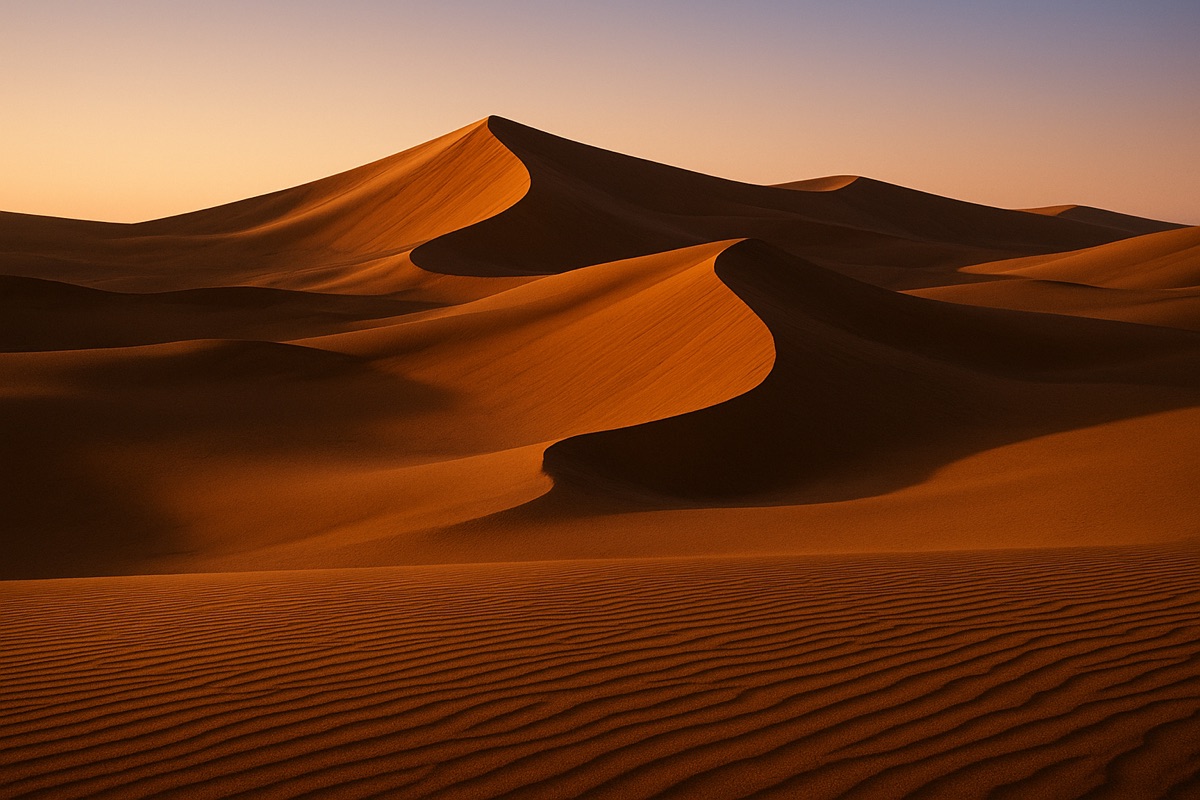
How much of the Sahara is actually covered in sand dunes?
Only about a quarter. The rest is gravel plain, bare rock, and mountains — the postcard dunes are the minority view.
How big is the Sahara?
Roughly 3.6 million square miles — about the size of the United States.
What did the Sahara look like around 8,000 years ago?
Green — grasslands, lakes, hippos and all. Rock art deep in the Egyptian desert, at the famous Cave of Swimmers, appears to show people swimming.
What does Saharan dust do for the Amazon rainforest?
Fertilizes it. Winds carry on the order of 180 million tons of Saharan dust across the Atlantic each year, delivering phosphorus the jungle soil badly needs.
Has it ever snowed in the Sahara?
Yes — the Algerian town of Ain Sefra has seen its dunes dusted white several times in recent decades. The photos look fake. They aren't.
What do camels actually store in their humps?
Fat, not water — the most durable myth in the desert. The water talent is real, though: a thirsty camel can drink around 30 gallons in about a quarter of an hour.
Which desert animal can go its entire life without drinking?
The kangaroo rat — it manufactures water metabolically from the dry seeds it eats.
Why does the fennec fox have such enormous ears?
They're radiators — oversized surfaces that shed body heat, with the bonus of hearing prey moving under the sand.
How does a sidewinder rattlesnake cross scorching sand?
Sideways, by design — its looping motion keeps only a couple of points of its body touching the hot ground at any moment.
How does a Namib desert beetle get a drink where rain almost never falls?
It does a headstand in the morning fog. Droplets condense on its bumpy back and roll straight down into its mouth.
What's remarkable about the Namib's welwitschia plant?
It grows exactly two leaves — ever — which shred into ribbons over a lifespan that can top a thousand years.
What are “singing” dunes?
Real — when sand avalanches down certain dunes, the tumbling grains produce a low booming drone that can reach around 105 decibels. You feel it in your chest before you place the sound.
How long does a saguaro cactus take to grow its first arm?
Often 75 years or more — and Arizona protects them by law; destroying one can be a felony.
What's the catch with the Gobi Desert?
It's freezing. Winter temperatures plunge far below zero and it snows — deserts are about dryness, not heat, and the Gobi is the proof.
Why can you walk barefoot on the dunes of White Sands at noon?
They're gypsum, not quartz — the brilliant white crystal reflects sunlight instead of soaking up heat, so the sand stays cool underfoot.
If you called the fat in the humps, the headstanding beetle, and the hippos in the Sahara, you're ready for the crossing — just pack more water than the kangaroo rat does.