Chocolate might be the only quiz topic where every reader brings a lifetime of field research. It's also one of the most mythologized foods on Earth — sweet stories that melt under a little heat. Three rounds follow: the drink years, the alleged accidents, and the numbers. Say each answer out loud before the reveal, and keep score in squares.
Round One: The Drink Years
Start with the timeline that reframes the whole topic. Cacao has been consumed for thousands of years — roughly how much of that history did chocolate spend as a solid you could bite? Lock it in. Almost none. Traces of cacao on ancient pottery push its history past 5,000 years, back to what is now Ecuador, and for nearly all the centuries since, chocolate was a drink — the Maya and Aztecs took it bitter and frothy, often spiked with chili, about as far from a candy bar as a beverage can get. The first molded eating-chocolate bar only appeared in 1847, from the British firm J.S. Fry & Sons. If chocolate's history were a single day, the bar shows up in time for the late news.
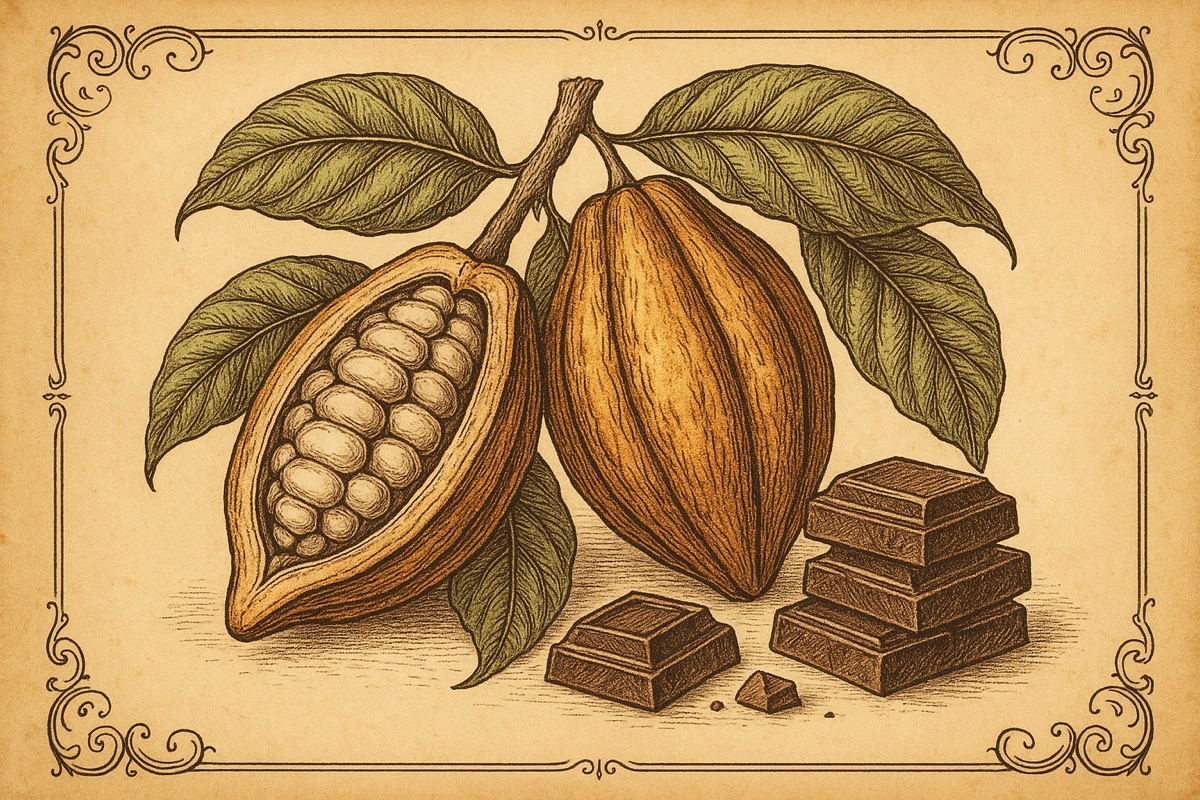
Science, for the record, endorses the obsession. What does the cacao tree's botanical name, Theobroma cacao, literally mean? 'Food of the gods' — Linnaeus himself named it, and he was not a man given to gush.
Once the bar existed, it improved fast. Milk chocolate arrived in 1875, when Daniel Peter of Vevey, Switzerland cracked the recipe using milk powder developed by his neighbor, a fellow named Henri Nestlé — a partnership you may have heard of. Four years later, Rodolphe Lindt invented conching, the hours-long mechanical churn that makes chocolate melt instead of crumble. Legend says he discovered it by leaving a mixer running over a weekend; the story is suspiciously tidy, but the machine changed chocolate forever either way.
Two modern postscripts. What does white chocolate not contain? Cocoa solids — it's cocoa butter, sugar, and milk, which is why purists keep filing objections. And in 2017, the industry unveiled ruby chocolate — naturally pink, faintly tart, and the first new category of chocolate in decades.
Round Two: Accidents, Alleged and Otherwise
Now the myth round. The chocolate chip cookie was famously invented by accident in 1938, when Ruth Wakefield of the Toll House Inn dropped chocolate chunks into dough expecting them to melt into chocolate cookies. True story? Lock it in. Almost certainly not. Wakefield was a trained dietitian and experienced cookbook author who knew exactly what an oven would and wouldn't do to a chunk of chocolate; food historians treat the 'accident' as legend. What is true: the cookie conquered America, Nestlé acquired the rights to print her recipe, and lore insists part of her payment was a lifetime supply of chocolate.
Next: what wartime observation inspired M&Ms? During the Spanish Civil War, Forrest Mars reportedly saw soldiers eating chocolate pellets in hard sugar shells — candy that survived the heat. He patented his version in 1941, and the American military became an early major customer, packing the heat-proof chocolate into soldiers' rations.
Two naming questions to finish the round. Why is a Hershey's Kiss called a Kiss? Nobody knows for certain — the favorite theory is that the machine 'kisses' the conveyor belt as it deposits each chocolate, but the company itself has never settled it. And German chocolate cake: German, as in Germany? No — as in Sam German, the man behind the Baker's sweet chocolate that the original 1957 recipe called for. The cake is Texan; the apostrophe in 'German's' fell off somewhere along the way, and menus have been quietly wrong ever since.
Round Three: The Cacao Belt
Geography first. Cacao only thrives in a band roughly 20 degrees either side of the equator — so which country grows the most? Not anywhere in Latin America: Côte d'Ivoire, in West Africa, produces about 40 percent of the world's supply. The trees themselves look like a prank — cacao pods sprout directly from the trunk — and it takes something like 400 beans to make a single pound of chocolate.
Consumption question: which country eats the most chocolate per person? Switzerland, at roughly 20 pounds per person per year, defending its title with quiet efficiency.
Now the sad-dog question, worth answering properly: why is chocolate dangerous to dogs but fine for you? Theobromine — humans metabolize the compound quickly, while dogs process it so slowly it can build to toxic levels. Keep the good stuff shelved high.
And a closing scene: the chocolate river in 1971's Willy Wonka — movie magic? No. It was a real river of water, cream, and chocolate. The cream was also real, which is why, by the end of filming, the river had spoiled and the set smelled the way betrayed dairy smells.
Final tally. If you called the 1847 bar, Sam German, and the cookie 'accident' that wasn't, you've officially out-researched a food you've been eating your whole life — treat yourself to a square of the good stuff, and keep it away from the dog.