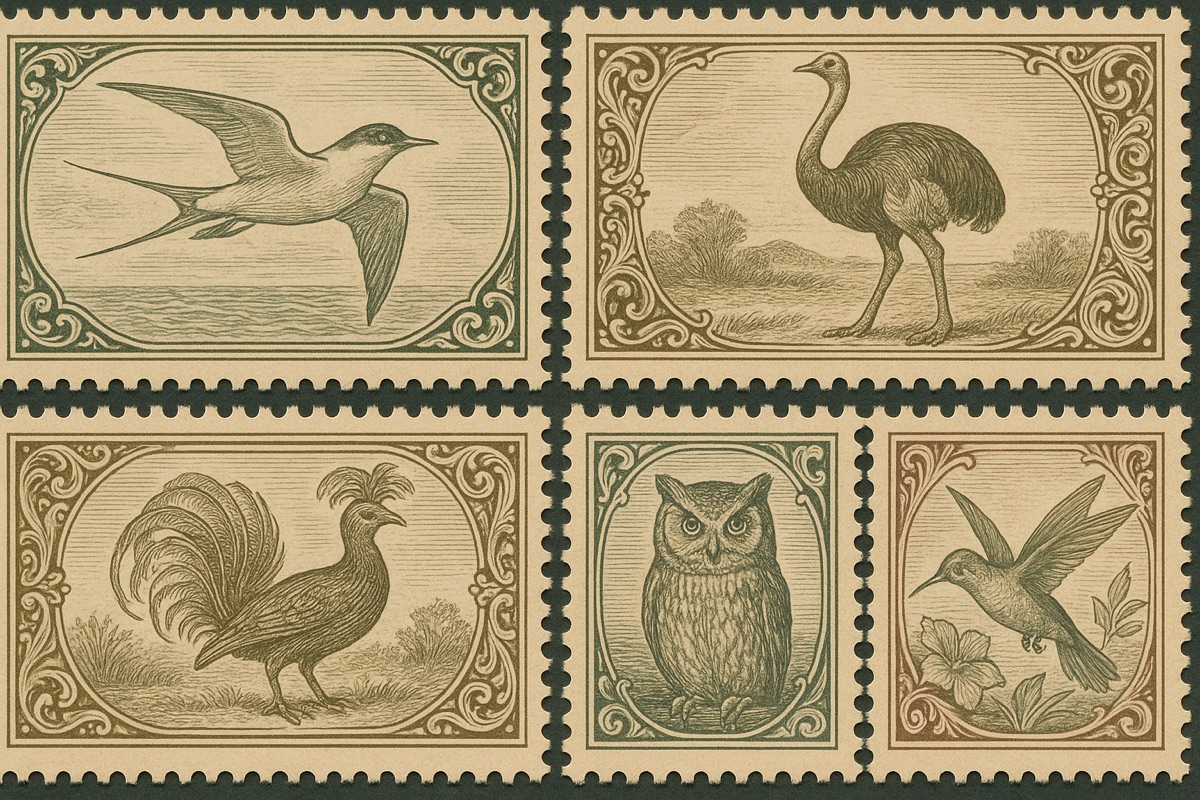
Birds are the dinosaurs that stuck around, and they act like it — commuting between the poles, outrunning racehorses, and doing uncanny impressions of power tools. Fifteen questions here, arranged from long-haul to just plain strange. Commit to each answer out loud before the reveal, keep score, and prepare to lose a point to a bird that weighs less than a coin.
Round One: The Long-Haul Commuters
Start with the frequent-flyer question. Which bird logs the longest migration on Earth? That's the Arctic tern, which breeds near the top of the world and winters near the bottom of it. Tracking studies have clocked yearly round trips of 44,000 miles and up — some individuals push closer to 60,000 — which means a long-lived tern covers something like three round trips to the Moon over its lifetime. The perk: it chases summer across both hemispheres, so it may see more daylight than any other animal alive.
The tern at least takes breaks. Which bird holds the record for the longest nonstop flight? The bar-tailed godwit. In 2022, a satellite-tagged juvenile flew from Alaska to Tasmania — about 8,400 miles in 11 days — without landing once. No food, no water, no rest, on its first migration ever. Think about that the next time a five-hour flight feels long.
One more from the sky. Which common bird can stay airborne for ten months at a stretch? The common swift. Tracking research has shown swifts feeding, drifting, and even sleeping on the wing, touching down essentially only to nest. For most of its year, landing is optional.
Round Two: Grounded on Purpose
Now for the birds that gave up flying and got interesting instead. What is the fastest animal on two legs? The ostrich, which can sustain speeds over 40 miles per hour. And here's the follow-up everyone gets wrong the first time: which is bigger, an ostrich's eye or its brain? The eye — about two inches across, the largest of any land animal, and yes, bigger than the brain sitting behind it. Evolution made its priorities clear.
Next: penguins can't fly, so what did their wings turn into? Flippers — and calling that a downgrade would be slander, because emperor penguins use them to "fly" underwater to depths beyond 1,500 feet. While we're in Antarctica: which parent incubates the emperor penguin's egg through the polar winter? The father, balancing it on his feet in the dark for around two months, eating nothing at all until the mother returns from the sea. Somebody put that bird on a card.
Finish the round in New Zealand. The kiwi lays an egg famous for what, exactly? Its outrageous size — roughly 15 to 20 percent of the mother's body weight, one of the largest egg-to-body ratios of any bird on Earth. The kiwi is also that rare bird with nostrils at the tip of its beak, which it uses to sniff out worms like a feathered bloodhound.
Bonus card between rounds, no charge:
What is a group of owls called?
A parliament — which explains a lot about parliaments.
Round Three: Strange Talents
Australia first. Which bird is famous for imitating chainsaws, car alarms, and camera shutters? The superb lyrebird, probably the finest mimic in nature. In the wild it stitches the calls of dozens of other species into its courtship song; the famous chainsaw and shutter impressions come mostly from birds raised around humans, copying whatever their environment supplies. Either way, the audio fidelity is good enough to fool the original.
Now the classic. Why do owls rotate their heads instead of just glancing sideways? Because they can't move their eyes — the eyeballs are tube-shaped and fixed in the skull. The workaround is a neck with twice as many vertebrae as yours, letting an owl swivel about 270 degrees without shifting its feet.
Three size questions to close. What is the smallest bird in the world? The bee hummingbird of Cuba, about two inches long and lighter than a U.S. penny. Which bird has the largest wingspan? The wandering albatross, stretching around 11 feet tip to tip and gliding for hours over the Southern Ocean without a single flap. And the most numerous bird on Earth? Not a sparrow, not a starling — it's the chicken, tens of billions strong, outnumbering every wild bird species by a comfortable margin.
Tally it up. If you landed the godwit's Pacific crossing, the father penguin's two-month fast, and the ostrich's eye-versus-brain problem, congratulations — you've out-flown the field without leaving your chair.