Antarctica is the continent everyone can picture and almost nobody has facts about — which makes it prime quiz territory. Three rounds follow: the paperwork, the locals, and the places that sound invented. Commit to each answer before the reveal and keep score; the questions get colder as they go.
Round One: The Fine Print at the Bottom of the World
Start with ownership. Which country owns Antarctica? Lock it in. The answer is none. Under the Antarctic Treaty — signed by twelve nations in 1959 and now backed by more than fifty — the whole continent is reserved for peaceful science: no military bases, no mining rush, no flags that legally count. Seven countries maintain territorial claims, and the treaty politely freezes every one of them. It's one of the most successful peace agreements ever written, and it governs a landmass bigger than Europe — roughly one and a half times the size of the contiguous United States.
Now the ice. About how much of the world's fresh water is locked in the Antarctic ice sheet? The answer is about 70 percent — some 90 percent of all the ice on Earth, piled more than a mile deep on average. All that ice also makes Antarctica, counterintuitively, the highest continent by average elevation: it wears its water as altitude.
One more for the round: what time is it at the South Pole? Trick question — every line of longitude converges there, so Antarctica has no official time zones. Stations simply keep the clock of their home country or their supply line; McMurdo runs on New Zealand time. And the pole itself refuses to hold still: the ice sheet above it slides about 30 feet a year, so every New Year's Day, staff reposition the marker at the geographic South Pole. The bottom of the world gets re-pinned annually.
Round Two: The Locals
Quick trap to open: how many polar bears live in Antarctica? Zero — they're strictly Arctic. Nature keeps the bears at one pole and the penguins at the other, which is excellent news for the penguins.
So what's the largest animal that lives its whole life on Antarctic land? Not a seal or a penguin — both feed at sea. The answer is Belgica antarctica, a wingless midge barely a quarter of an inch long. The continent's biggest full-time land resident could sit on your fingernail.
Humans, of course, commute — but who was the first person ever born on the continent? Emilio Marcos Palma, in January 1978, at Argentina's Esperanza Base. His mother was flown south late in her pregnancy, in part so Argentina could bolster its territorial claim. Geopolitics has taken stranger forms, but not many.
Two lifestyle questions to close the round. First: can you get cash at the bottom of the world? Yes — McMurdo Station has ATMs, installed by Wells Fargo in the 1990s. Two machines were shipped down: one dispenses cash and the other serves as its spare-parts donor, because the repair technician is a very long flight away. Second: what's the biggest everyday danger at an Antarctic station — cold, crevasses, or fire? Lock it in. It's fire. The air is bone-dry, the winds feed flames, and liquid water is ironically scarce; McMurdo maintains a professional fire department for exactly this reason. And one absence you'd never guess: there are no sled dogs anywhere on the continent — banned since 1994, largely for fear that canine diseases could jump to seals.
Round Three: The Places That Sound Invented
Antarctica is the windiest continent, and the title has a home address. Commonwealth Bay has recorded gusts over 150 miles per hour, with average yearly winds near 50 — the explorer Douglas Mawson, who wintered there, titled his book about it The Home of the Blizzard, and he was not exaggerating for sales.
Next: what is Blood Falls? Exactly what it sounds like — a five-story stain of red pouring from the snout of Taylor Glacier. The color is iron: ancient, salty, iron-rich water trapped beneath the glacier rusts on contact with air, striping the ice like a wound. Discovered in 1911, it took scientists nearly a century to work out the plumbing.
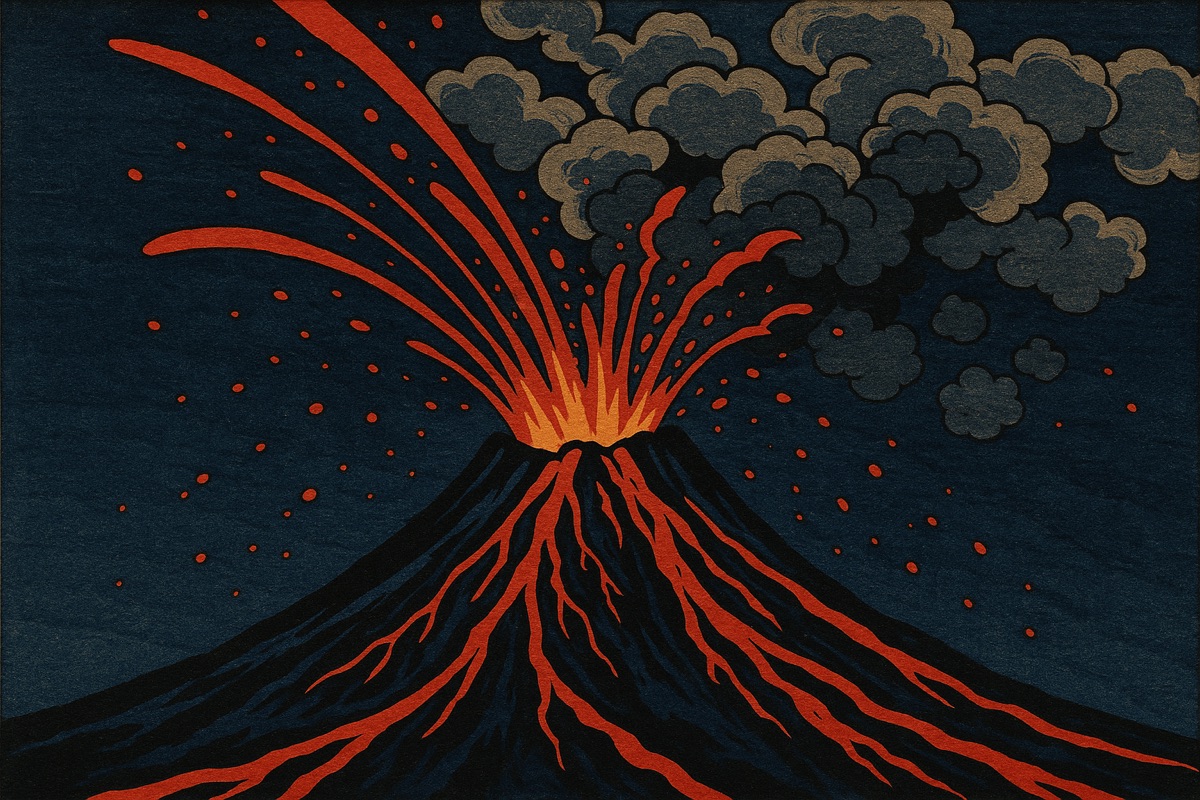
Keep going south — sort of. Mount Erebus is the planet's southernmost active volcano, and it comes with a flourish: a lava lake that has churned in its summit crater for decades, one of the very few long-lived lava lakes on Earth. A continent of ice keeps a pot boiling.
Iceberg question: how big was B-15, the largest iceberg ever reliably recorded, which broke off the Ross Ice Shelf in 2000? About 4,200 square miles — roughly the size of Jamaica. A drifting Jamaica made of ice.
Last one. What's under all that ice? Among other things, an entire mountain range — the Gamburtsevs, an Alps-sized chain buried completely, never once seen directly by human eyes. And the rocks tell an older story still: Antarctica was once warm and forested, and dinosaurs lived there — including a crested Jurassic predator named Cryolophosaurus, nicknamed Elvisaurus for its pompadour of a crest.
Tally up. If you landed the missing time zones, the quarter-inch midge, and the Jamaica-sized iceberg, you've earned bragging rights over a continent that — as you can now explain — nobody else can claim either.