Rome ran the Mediterranean world for centuries, and yet most of what people "know" about it comes from the movies. That's good news for you, because Roman trivia is where confident people go to be wrong. Three rounds follow — answer out loud before each reveal, keep score, and prepare to have the thumbs-down thing taken away from you forever.
Round One: Gladiator School
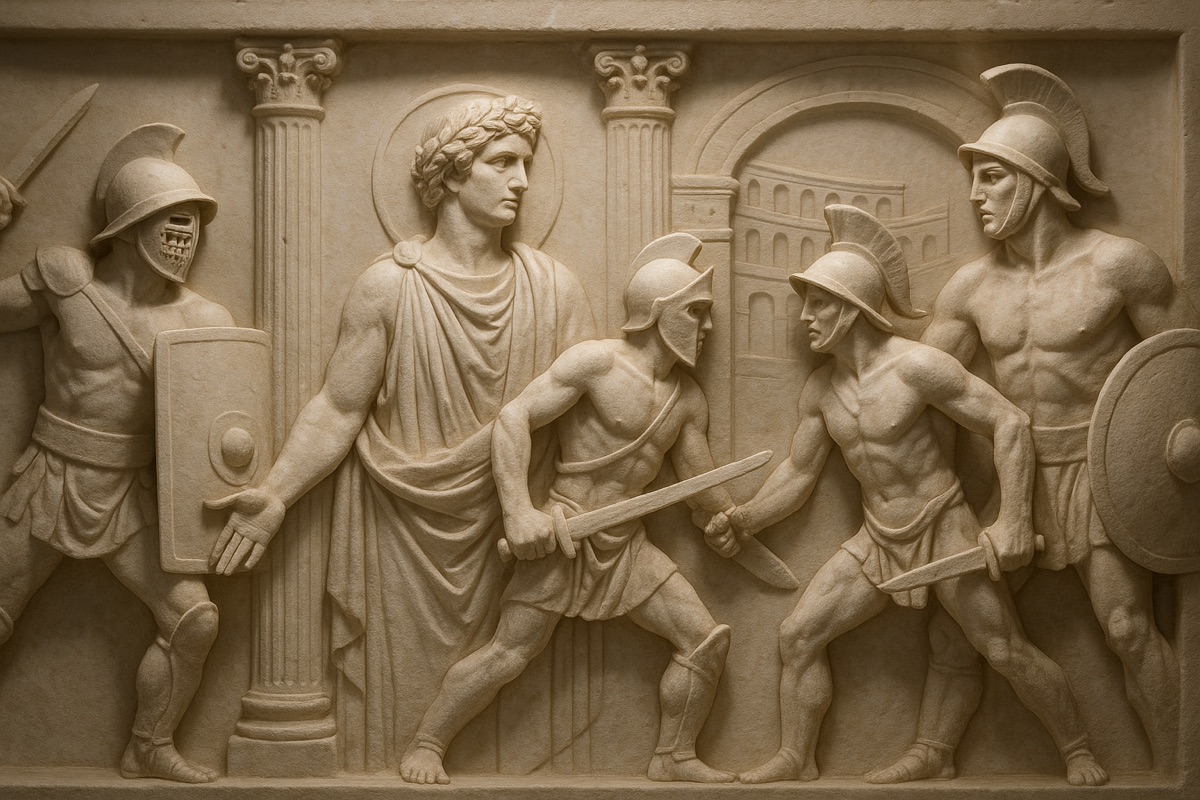
Start with the big one. True or false: most gladiator fights ended in a death. False — and it's not especially close. A trained gladiator was a serious investment, years of feeding and coaching walking around on two legs, and the owners who leased them out wanted them back intact. Bouts had referees and rules, and a defeated fighter could appeal for missio — an honorable reprieve that let him lose, live, and fight another day. Deaths absolutely happened; they just weren't the business model.
Next: what did gladiators mostly eat? Slabs of meat feel on-brand, but the answer is closer to porridge. Bone analysis from a gladiator cemetery at Ephesus points to a heavily plant-based diet built on barley and beans — so much barley that Romans nicknamed gladiators hordearii, "barley men." The bulk may even have been the point: a layer of padding between an opponent's blade and anything important.
Now, the thumbs. In the arena, did thumbs-down really mean death? The honest answer is that nobody knows. Ancient writers mention a "turned thumb" — pollice verso — sealing a loser's fate, but never bothered to record which direction meant what. Our up-good, down-bad certainty owes less to Rome than to a famous 19th-century painting, which Hollywood then treated as a documentary.
One more for the round: what was a vomitorium? Not a room for purging between banquet courses — that's one of history's most durable myths. A vomitorium is a stadium passageway, so named because it "spewed" tens of thousands of spectators out of the Colosseum in minutes. The only thing it disgorged was foot traffic.
Round Two: The Concrete Round
Engineering question, and a genuinely satisfying one. What still stands as the world's largest unreinforced concrete dome? The Pantheon in Rome — about 142 feet across, completed under the emperor Hadrian nearly 1,900 years ago, and never surpassed without steel reinforcement since. The Romans even lightened the mix toward the top and left a hole in the middle, because apparently showing off is timeless.
So what was the not-so-secret ingredient in Roman concrete? Volcanic ash — pozzolana, quarried near Naples and around the Bay of Naples. Mixed with lime, it produced concrete that could set underwater, which is how Rome poured harbors straight into the sea. Stranger still, some Roman marine concrete appears to have grown stronger over the centuries as seawater reacted with the mix, and modern researchers argue that leftover lime fragments in the mortar could re-seal small cracks as water crept in — a kind of accidental self-healing. Two thousand years on, materials scientists are still reverse-engineering a recipe made by people in sandals.
Round Three: Dinner and Dye
Menu question. Which of these could no Roman emperor ever have tasted: flamingo tongue, fermented fish sauce, or tomato sauce? Lock it in. It's the tomato — tomatoes, potatoes, and corn are all American crops that reached Europe only after 1492. Italian food as we picture it was impossible in ancient Italy. Flamingo tongues, on the other hand, really did appear at extravagant banquets, and garum — a pungent fermented fish sauce — was the ketchup of the empire, splashed on nearly everything. Ordinary Romans, meanwhile, mostly ate puls, a humble grain porridge, which rather punctures the endless-feast image.
Speaking of delicacies: which small animal did wealthy Romans fatten in special jars for the table? The dormouse. Edible dormice were raised in ceramic containers called gliraria and served as a luxury snack — a dish so associated with excess that Roman moralists complained about it.
Last question, and it's the expensive one. What was Tyrian purple, the color of Roman power, actually made from? Sea snails. Dye-makers extracted it drop by drop from murex snails, and by ancient accounts it took thousands upon thousands of them to dye a single garment — which is why the color was worth more than its weight in precious metal and why the dye works reeked so badly they were kept at the edge of town. Purple-bordered togas marked out senators, and under the emperors the richest purples became tied to the throne itself. The most powerful men on earth, dressed head to toe in snail.
Tally it up. If you called the barley men, the fake vomitorium, and the snail economy, congratulations — you now know Rome better than most of its movies do.