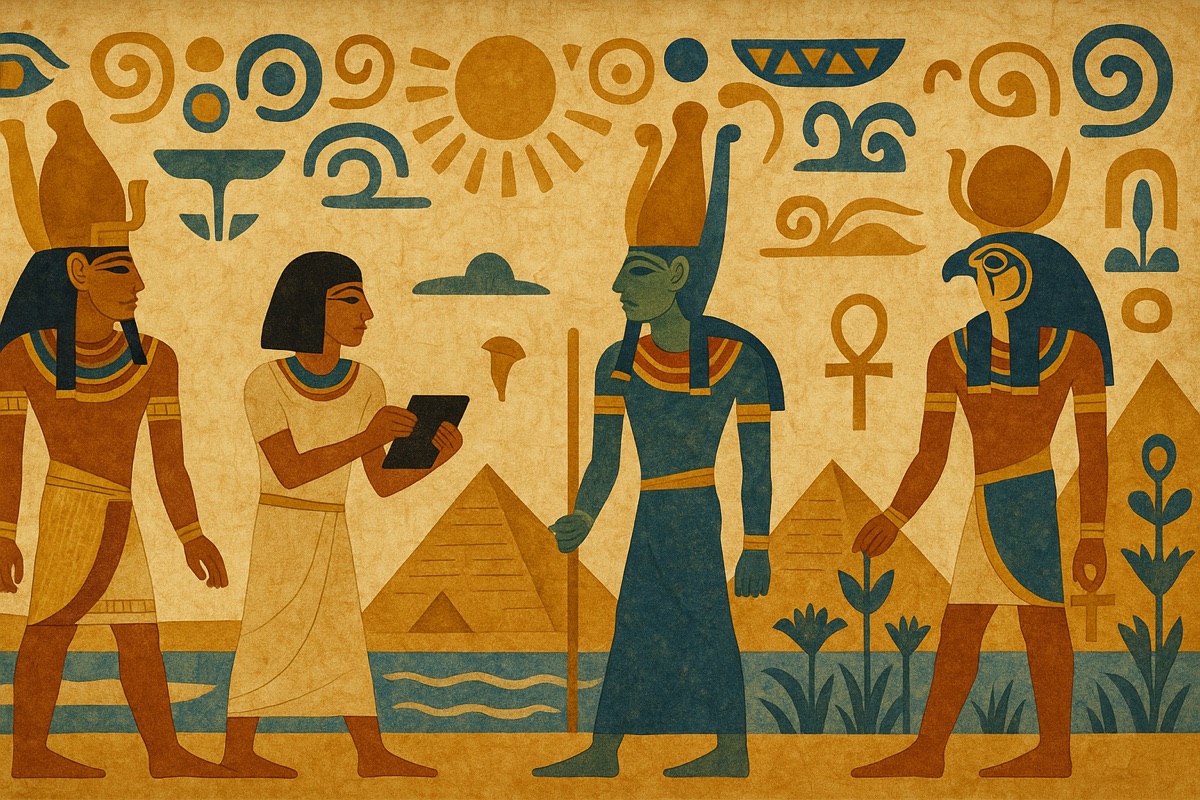
Ancient Egypt is where trivia goes to show off. The civilization lasted so long and left so much behind that even the warm-up questions come with a twist. Play it straight: commit to each answer before the reveal, keep score, and prepare to be humbled by people who have been dead for four thousand years.
Round One: The Pyramids (and Who Actually Built Them)
Start with a superlative. After the Great Pyramid of Giza was finished around 2560 BC, how long did it remain the tallest man-made structure on Earth? Guess a number before reading on. The answer is roughly 3,800 years — it wasn't surpassed until the spire of Lincoln Cathedral went up in England in the early 1300s. Nothing your city has built will hold a record for even one percent of that run.
Next, the myth-buster: were the pyramids built by slaves? Lock in your answer, because Hollywood has been coaching you wrong. Archaeologists working at Giza have uncovered workers' villages, bakeries, breweries, and the tombs of the laborers themselves — buried with honor near the pyramid they built. The evidence points to paid, rotating crews of Egyptian workers, fed on bread and beer. Charlton Heston movies notwithstanding, the slave-army story doesn't hold up.
Now the scale question. Roughly how many stone blocks make up the Great Pyramid? The standard estimate is about 2.3 million. And here's the detail that rearranges your mental picture: it was originally encased in polished white limestone. The stepped, sand-colored monument you know is essentially the building with its skin stripped off — in its prime it gleamed.
Round Two: Mummies, Minus the Movie Nonsense
Time for the gross-out portion, which is also the accuracy portion. During mummification, how did embalmers remove the brain? Through the nose, with a long hook. The brain got no special treatment because Egyptians considered it unimportant. Which sets up the better question: which organ was deliberately left inside the body? The heart. Egyptians believed it was the seat of thought and character, and the dead would need it for the final exam — the weighing of the heart against the feather of Ma'at, goddess of truth. Fail that weigh-in and eternity was off the table.
The other organs — lungs, liver, stomach, and intestines — went into four canopic jars. And the whole process, from death to finished mummy? About 70 days, most of it spent drying the body in natron, a natural salt. Seventy days to eternity is, all things considered, a reasonable timeline.
One more, for the horror fans: what happened to Howard Carter, the archaeologist who opened Tutankhamun's tomb in 1922 and supposedly triggered the mummy's curse? He lived another seventeen years and died of lymphoma in 1939, aged 64. The curse story was largely a newspaper invention. Tut himself is a great trivia twist, by the way — he was crowned around age nine, died around nineteen, and was a minor king. He's the most famous pharaoh today mostly because his tomb was the one the robbers largely missed.
Round Three: Daily Life on the Nile
Who wore eye makeup in ancient Egypt — men, women, or both? Both. The famous black kohl eyeliner was standard for everyone who could afford it, worn for beauty, religious meaning, and — Egyptians believed — protection for the eyes.
Next: what were the workers who built Egypt's monuments commonly paid in? Bread and beer. Beer was a daily staple for adults and children alike — thick, nutritious, and safer than questionable water. An economy that runs on carbohydrates is an economy your author can respect.
Calendar question. How many days were in the ancient Egyptian civil year? 365 — twelve months of thirty days plus five festival days at the end. Their calendar is an ancestor of the one on your wall.
Now the identity check that wins arguments: Cleopatra, the last pharaoh — was she ethnically Egyptian? No. She was Macedonian Greek, the final ruler of the Ptolemaic dynasty that took over after Alexander the Great. Ancient writers tell us she was reportedly the first of her whole line to bother learning the Egyptian language, roughly 275 years into the family business.
She wasn't the only woman on the throne, either. Which female pharaoh ruled as a king in her own right and was depicted wearing the ceremonial false beard? Hatshepsut, one of Egypt's most successful builders — the beard was standard-issue royal regalia, and she claimed the whole uniform.
Last one. What discovery finally let scholars read hieroglyphs after centuries of guessing? The Rosetta Stone — the same decree carved in hieroglyphs, Demotic, and Greek, which let Jean-François Champollion crack the code in 1822.
Count your score. If you knew the heart stayed in, the workers were paid, and Cleopatra was Greek, congratulations — you know Egypt better than the movies do, which is a low bar the ancient Egyptians would appreciate you clearing anyway.