For years, keepers at Chester Zoo watched the same disappointing pattern repeat itself. Jolene, a female secretarybird, would lay her eggs. Her mate, John, would show almost no interest. The eggs never hatched.
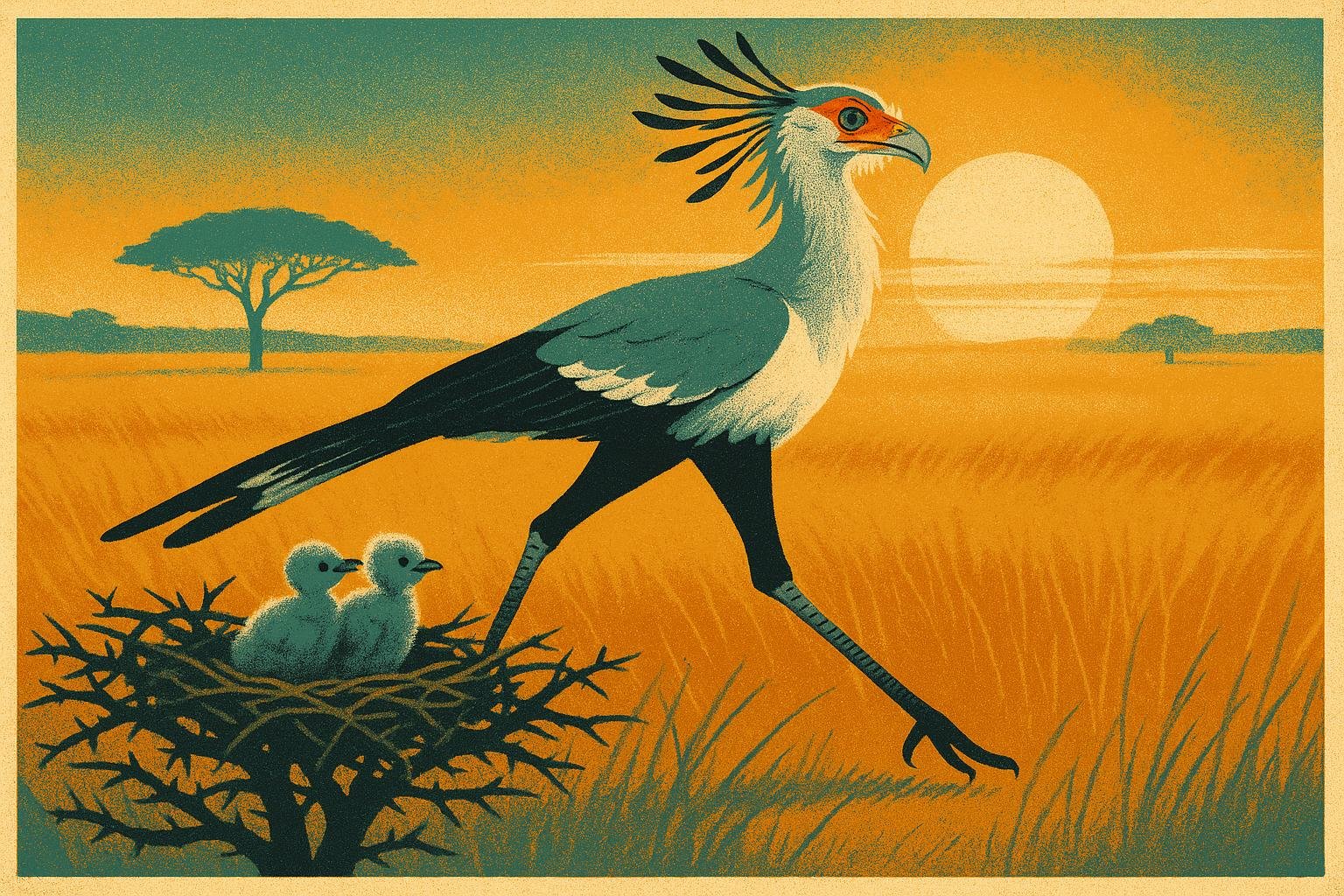
Then, in the past year, John changed his mind. He began taking his turn on the nest, sharing incubation shifts with Jolene. What followed was the first successful breeding of one of Africa's rarest and strangest birds of prey in the zoo's 95-year history: five secretarybird chicks, hatched behind the scenes at the Cheshire zoo and announced to the world on 5 August 2026.
“The most recent breeding has been so successful because John has stepped up and shared incubation and is proving to be a brilliant Dad,” Jonathan Beilby, assistant team manager for birds at Chester Zoo, told Discover Magazine.
Why five chicks is a very big number
Secretarybirds are the tall, quill-crested raptors of Africa's grasslands — birds that mostly walk instead of soar, striding on long, thin legs in search of prey. Their scientific name, Sagittarius serpentarius, translates roughly as “the archer of snakes,” a nod to their habit of dispatching venomous snakes by stamping on them.
They are also disappearing. As grassland across Africa has been converted to farmland and towns, the species has declined steeply; the IUCN Red List classifies it as Endangered, and Chester Zoo says as few as 6,700 birds may remain in the wild. In zoos, the safety-net population is tiny too: across the entire European conservation breeding programme there are just 79 secretarybirds, and in the previous 12 months only three other chicks had hatched anywhere in it. Chester's five, arriving in one season at one zoo, more than doubled the continent's recent tally.
The birds did not simply get lucky. John and Jolene arrived only a few years ago as part of a coordinated international effort, and keepers spent that time studying courtship, breeding biology and the precise conditions the pair needed, refining their care in a dedicated behind-the-scenes breeding facility.
“This is the first time secretarybirds have ever bred at Chester Zoo in our 95-year history,” bird keeper Jamie Cartwright-Stock said. “Seeing five healthy chicks hatch in such a short space of time is an incredible achievement for everyone involved... it really feels like we've reached a major breakthrough.”
Notes for every zoo in Europe
Because those first chicks were so precious, keepers hand-reared the first two and documented every stage of their development, from hatching to the moment the legs finally work. John and Jolene then hatched and raised three more themselves, reportedly about 10 days apart in age, feeding each youngster evenly.
Beilby described chicks that grow at a startling rate — a weekend away, he told Discover, and they seem to have doubled in size — and noted that the birds don't stand up for around 60 days, making the first sight of those famous long legs in use a small event in itself. The oldest chick has already begun displaying and making threatening noises when keepers come near.
All of that observation is the real export. Chester's team says the records will be shared with other conservation zoos so the techniques can lift breeding success across the programme. “Every chick hatched in conservation zoos is becoming increasingly important for the future of this remarkable species,” said Andrew Owen, the zoo's head of birds, who added that secretarybirds have vanished from parts of Africa where they were once common.
The chicks remain off-show for now, growing into their eyes, their crests and those improbable legs. Somewhere in Europe, the next brood may hatch a little more easily because of notes taken in Cheshire this summer — and because one previously indifferent father finally decided to sit down.