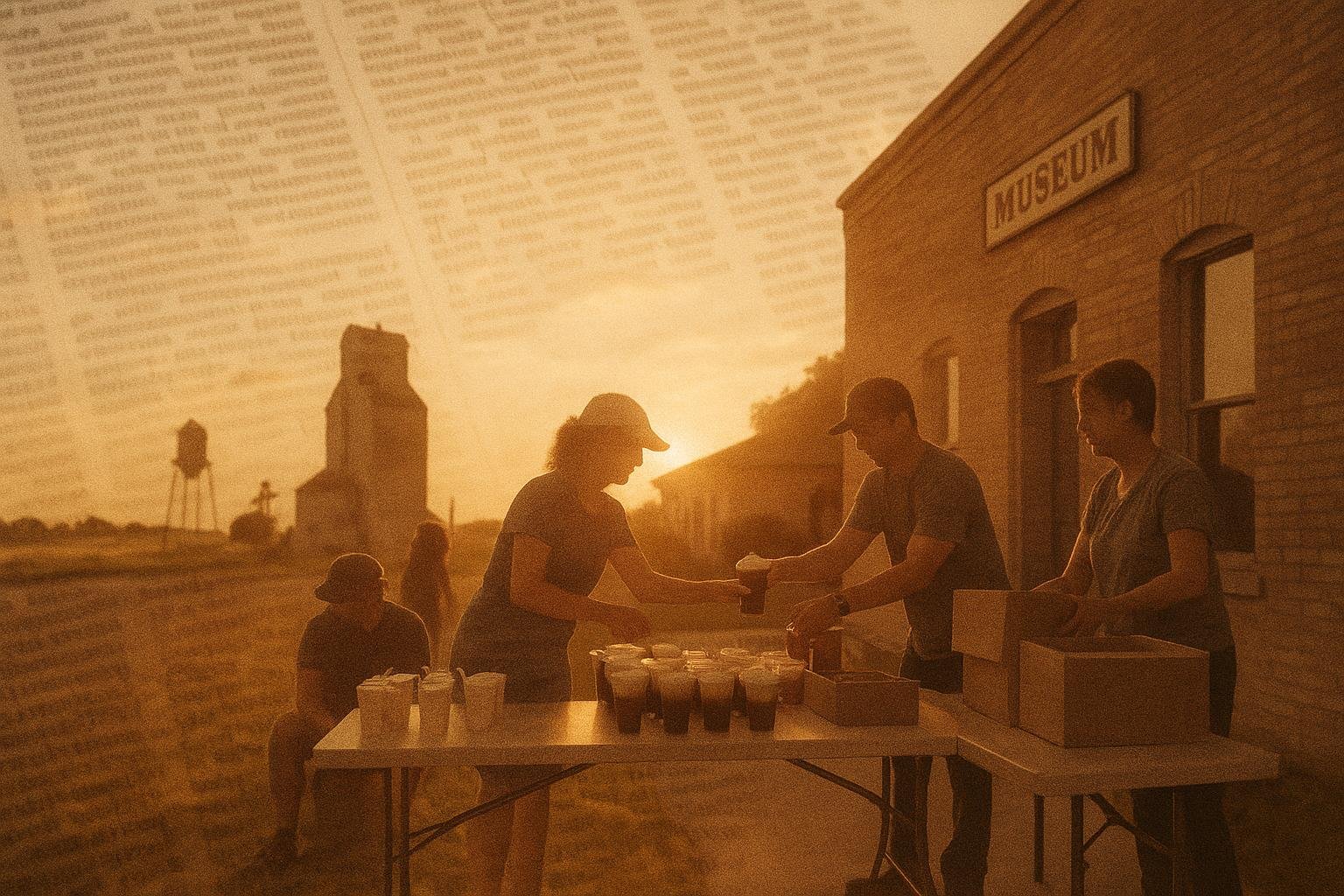
The chrome came out early. On a Saturday in mid-August 2026, the parking rows at Central Park in Ardmore, Oklahoma, filled up with cars and motorcycles whose owners had paid a small entry fee for the privilege of being looked at. A few yards away, vendors were setting up folding tables they had also paid for. Families drifted between them with kettle corn and lawn chairs. Every dollar of it — the booth rentals, the entry fees, the cash people pushed across the table for 50/50 raffle tickets — was headed somewhere else.
That was the whole point. The event, called Love Your Neighbor, was built to turn an ordinary summer Saturday into money for nonprofits and people in need around the Ardmore area, according to coverage from KTEN, which was also carried by Star Local Media on Aug. 15, 2026. Organizers said proceeds were earmarked for several local causes, including families of children with cancer and people facing domestic violence.
A gap she couldn't stop seeing
Love Your Neighbor co-owner Lindsey Griffin told KTEN the organization grew out of something she kept noticing in her own community: people who needed help on one side, and nonprofits without enough funding to give it on the other.
"It was a gap between people that were hungry and in need, and nonprofits that were lacking funding," Griffin said. "So I thought, 'Well Lord, how can I fix this problem?' And He gave me this idea."
The idea, as it turns out, looks a lot like a block party. Rather than asking one big donor for one big check, Love Your Neighbor asks a whole town for a lot of small ones and makes the asking fun — a car show here, a motorcycle row there, a raffle where half the pot goes home with somebody's neighbor and half goes to the cause. The organization's name is not decoration. Griffin said the mission is rooted in faith, and she framed the work in plain terms.
"We're doing what He calls us to do, which is love our neighbor as ourselves," she said. "So that's what we're stepping up and doing. We're not talking about it. We're being about it."
Money that never leaves the zip code
Organizers had not announced a final tally in the initial coverage, and it is worth saying plainly: no total, no attendance count and no full list of recipient organizations were released with the story. What was clear is where the money is pointed — at the kinds of needs that rarely make headlines and rarely qualify for national grants. A family whose child is in treatment three hours from home. Someone leaving a dangerous house with a trash bag of clothes. A pantry shelf that empties faster in August than the budget expects.
Ardmore is a city of roughly 25,000 in south-central Oklahoma, about halfway between Oklahoma City and Dallas. Nonprofit money in a place that size does not arrive from far away very often. It circulates. The $20 a vendor pays for a table becomes gas money for a hospital run; the $30 a rider pays to park a restored bike in the sun becomes a night in a shelter bed. Griffin has said the need can be closer to home than people realize, and in a town like Ardmore, that is not a metaphor — it is the person two pews over or one street down.
There is something quietly stubborn about a fundraiser like this one. Nobody flew in. No celebrity headlined. A handful of people booked a park, printed some raffle tickets, and asked their neighbors to show up with their cars and their wallets and a few free hours. Then their neighbors did.