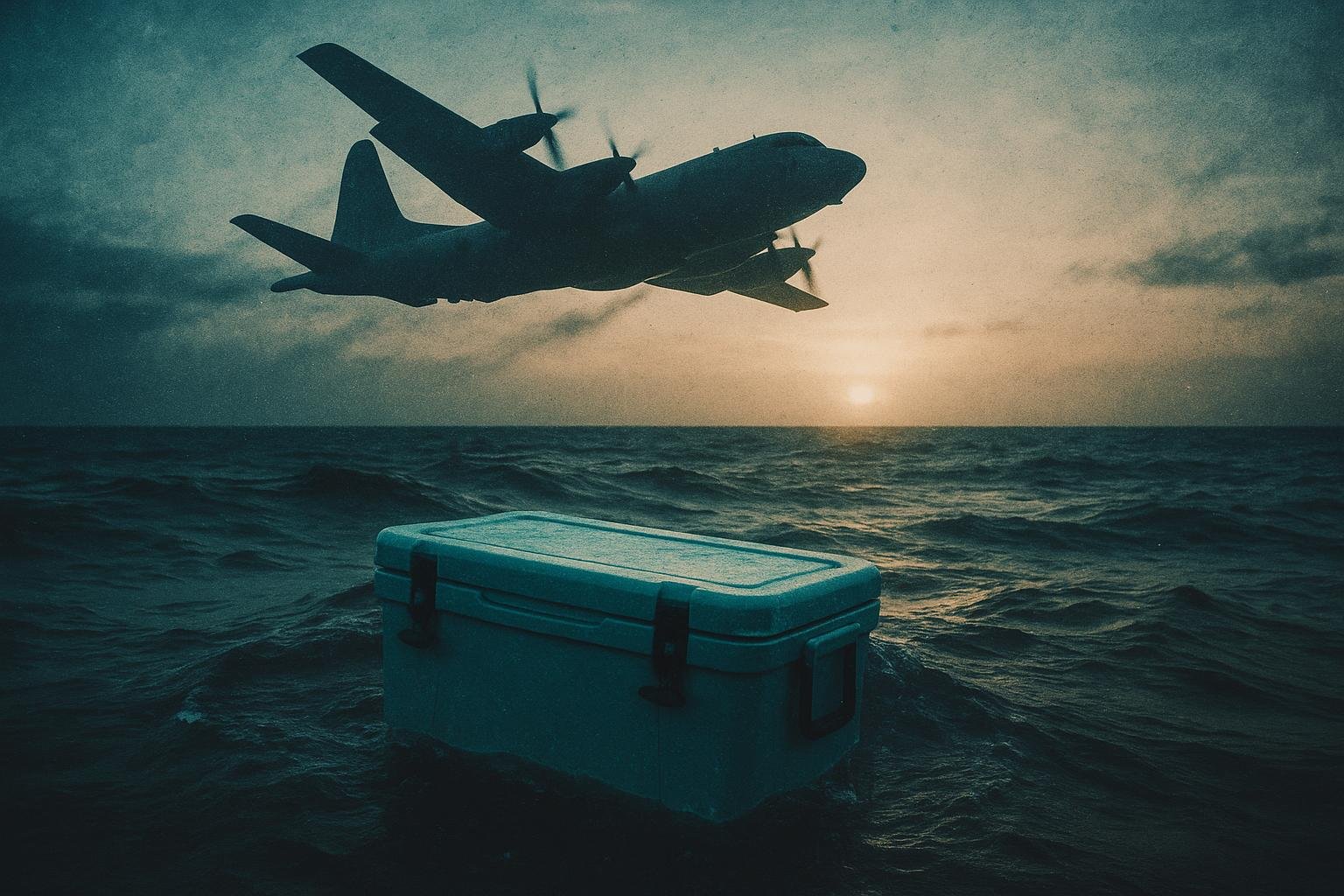
From the air, it looked like a scrap of turquoise on a very large sea. A navy aircraft crew scanning the Pacific off southern Mexico spotted the shape bobbing in the swells about 150 miles from land — and inside it, two men waving.
They were fishermen, and they had been out there for five days without food or fresh water. The Mexican navy pulled them aboard a patrol vessel on Wednesday, Aug. 19, in one of the more improbable rescues of the year: two grown men kept alive by the insulated box normally used to keep their catch cold.
A routine trip that ended in the water
The pair had left the community of Paredón, in the municipality of Tonalá, Chiapas, on Friday, Aug. 14, aboard a small vessel widely reported as the Camaronera. Their last contact with shore came that same day. When the hours stretched into silence, staff at their fishing cooperative sent out a distress call asking for help finding the two men — one 53, the other 32, according to the navy's account.
Mexican and Central American outlets identified them as Daniel Guerrero Martínez and José Luis Portela Villegas, both from Tonalá, though the navy itself did not release names and some reports listed slightly different ages and spellings. By Portela's account, carried in regional coverage, their boat went down fast — fast enough that there was no time to grab provisions, drinking water, or the radio. Several Mexican reports say a heavy wave swamped the vessel, and that the men stayed up using the fish cooler and empty fuel jugs.
What followed was an enormous search. Naval personnel from the Twenty-Second Naval Zone, based at Puerto Chiapas, deployed surface and air units, widening the sweep across open Pacific water until the cooler turned up roughly 130 nautical miles — about 240 kilometers — off the Chiapas coast, the state that borders Guatemala.
"We didn't think we were going to survive"
Video released by Mexico's Secretariat of the Navy shows the large blue-green box riding dark swells as a patrol vessel closes in, the two men sitting inside it. Photos taken later on land show one fisherman on a stretcher and the other in a wheelchair; both showed signs of dehydration after five days of sun exposure.
In footage shared by the navy and reported by CNN, one of the men said they had not expected to live through it. "The only thing we could do was pray to God and wait for the help of all of you here from the Navy," he said. The other described the ordeal as the hardest thing imaginable, adding that he would not wish it on anyone. The men said they ate and drank nothing at all during those five days.
After being lifted aboard, both were medically evaluated, then airlifted to port for further treatment — and then reunited with their families. Photographs of those reunions circulated on Mexican social media in the days that followed.
The navy framed the operation as proof of its commitment to safeguarding human life at sea, noting that coordinating surface and air units let searchers cover far more ocean than either could alone. That coordination is the quiet hero here: a cooperative that refused to wait, crews that kept flying grid after grid of empty water, and one stubborn plastic box that happened to float.
Five days, no food, no water, 150 miles of Pacific — and two fishermen home in Tonalá, telling the story themselves.